
SEO KeywordResearch Agency
Find the Keywords That Reach Your Customers
We find the exact terms your customers type into search engines (and the prompts they put to AI assistants like ChatGPT, Perplexity, and Gemini) and attach those keywords to a plan tailored to your needs, for both content and transactional pages.

What does an SEO agency withkeyword research expertise do?
Executed correctly, keyword research prevents internal cannibalization and directs your resources toward queries where you can achieve victory.
We don't only look at the keywords your competitors already rank for. We also search for lower-competition opportunities they've missed, which is often where a smaller site finds room to grow.

Signs you need SEO Alive'skeyword research
Sign
What SEO Alive fixes
You're targeting keywords but not ranking
Search intent validation and SERP analysis to find the terms that match what search engines actually reward for your domain (plus the hidden opportunities competitors have overlooked).
Your content calendar has no priority, or priority is set by organic volume alone
A keyword-led strategy where every topic is scored on volume, intent, difficulty, business value, distance from conversion, and seasonality before anyone starts writing.
You're invisible for relevant queries in AI-generated answers
A prompt research layer: we map the questions users ask ChatGPT, Perplexity and Gemini, and identify which of your pages should be answering them.
You're cannibalizing keywords across pages
A keyword mapping audit built on one rule: one URL owns one specific set of keywords. We clean up the architecture before it costs you rankings.
What our keyword research service includes
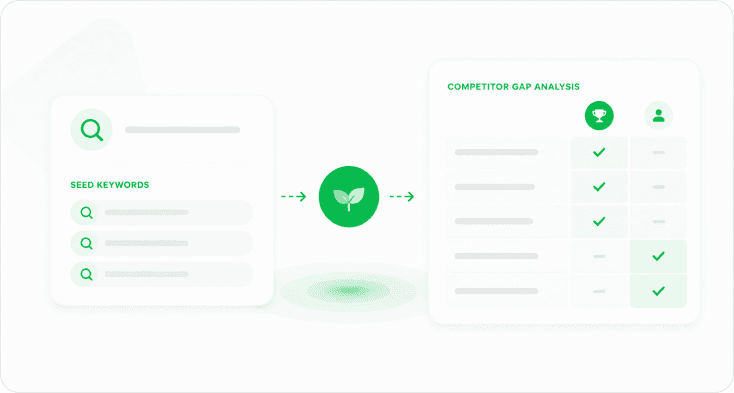
Seed keyword discovery and competitor gap analysis
We start from your products, services, and audience, expand the seed list, and run a gap analysis against your closest competitors to see which terms they capture and you don't.
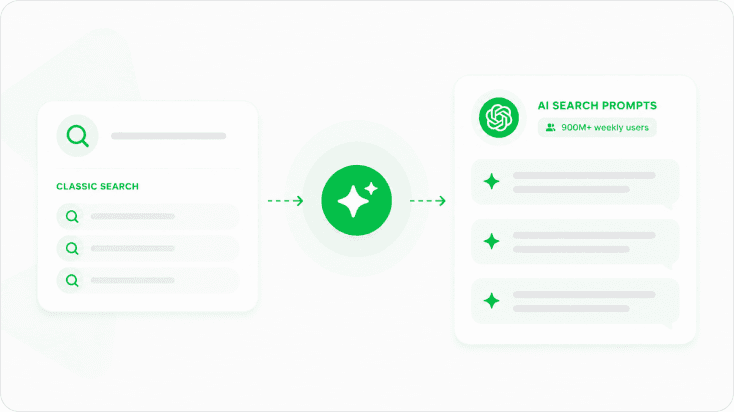
Prompt and AI search keyword research
Alongside classic search queries, we map the conversational prompts people ask AI assistants. ChatGPT alone reached 900 million weekly active users in 2026, so the way your audience phrases a question to a model is its own research surface, with its own intent and citation patterns.
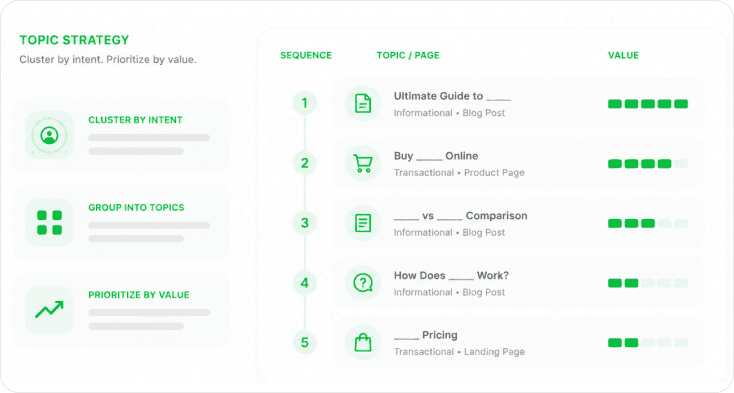
Topic grouping and prioritization
We cluster keywords by the intent behind them, group them into blog topics and transactional pages, and prioritize them by the value they can bring. You get a sequence, not just a spreadsheet.
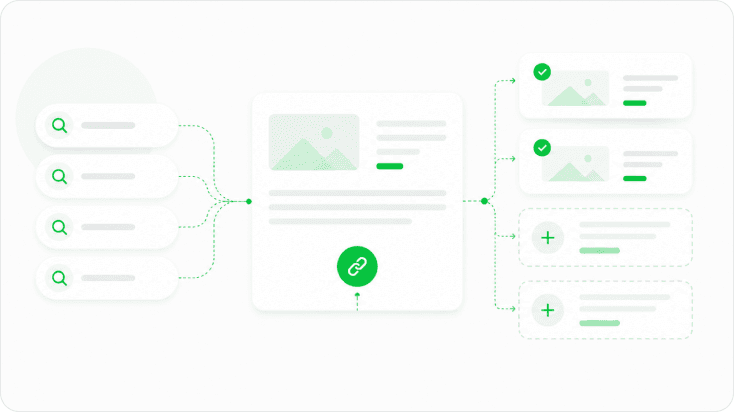
Keyword mapping to existing and new pages
Every target keyword is tied to a single page: an existing URL to optimize, or a new one to create.

Keyword tracking and performance monitoring
We track your keyword performance using your own Google Search Console and Google Analytics 4 data and present it through SEOcrawl, our proprietary software.
You can see how rankings, clicks, and traffic evolve without digging through spreadsheets, and we use those same reports to adjust the keyword strategy as the results come in.
Keyword research in action
How the right keywords and strategy led to results
Chess.com has been an SEO Alive client since 2016. One clear example of keyword research at work is its glossary section, /terms.
The team worked (and does to this day) researching emerging chess topics with organic potential, then consolidated other pages covering the same terms so they stopped competing with each other.
That mix of new keyword discovery and cannibalization clean-up took the section to 2.2 million clicks in 2022, a year-on-year increase of more than 939,000 clicks.
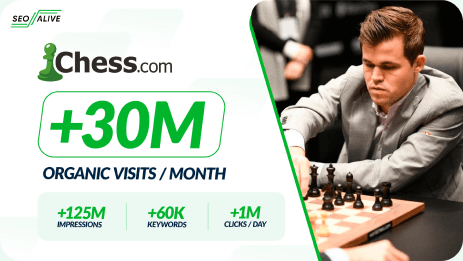
The same approach, applied across the site, lifted Chess.com from fewer than 10,000 keywords ranking in the top 10 in 2015 to over 60,000 by 2023.
Get a keyword research audit
We'll map your current keyword coverage, find the gaps, and show you where your organic and AI-search visibility is being missed.
Request your SEO + AI DiagnosisFrequently Asked Questions
+What is SEO keyword research?
It's the process of finding and prioritizing the search terms your audience uses, then matching each term to the page best placed to rank for it. Keyword research tells you what to write, what to optimize, and which pages are competing for the same intent.
+How is keyword research different for AI search?
Traditional research targets short queries typed into a search engine. AI search research looks at the longer, conversational prompts people give assistants like ChatGPT, Perplexity, and Gemini. The intent often overlaps, but the phrasing and the way each tool selects and cites sources differ, so we research both surfaces.
+How long does keyword research take?
It depends on the size of your site and how broad your market is. A focused project for one service area can be ready in a couple of weeks. Comprehensive mapping for an entire site—spanning transactional and informational assets—requires more time, as it remains a continuous, evolving effort.
After an SEO diagnosis, we agree on a timeline with you.
+What do you deliver at the end of a keyword research project?
You receive a strategic keyword mapping audit linking every term to a unique URL. This roadmap separates informational blog topics from transactional landing pages, incorporating intent and difficulty metrics to establish a clear, prioritized order of work.
+Do I need keyword research if I already have a content strategy?
Yes. A content strategy sets the themes; keyword research tells you which exact terms within those themes have demand, which ones match buying intent, and which you can realistically win.
Keyword research also catches cannibalization and the gaps that a theme-level plan tends to miss.
Your growth and your revenue, our obsession!
Book a free 30-minute live session with our team. We tailor it to your goals so you leave with a clear plan for SEO + AI growth.